
The Child Who Forgot They Had a Body
- AT

- Jun 16
- 10 min read
One of the most striking features of modern childhood is rarely discussed. Parents, educators, psychologists, and policymakers devote enormous attention to children's physical health, emotional well-being, academic performance, and social development, yet comparatively little attention is paid to how children experience their own bodies.
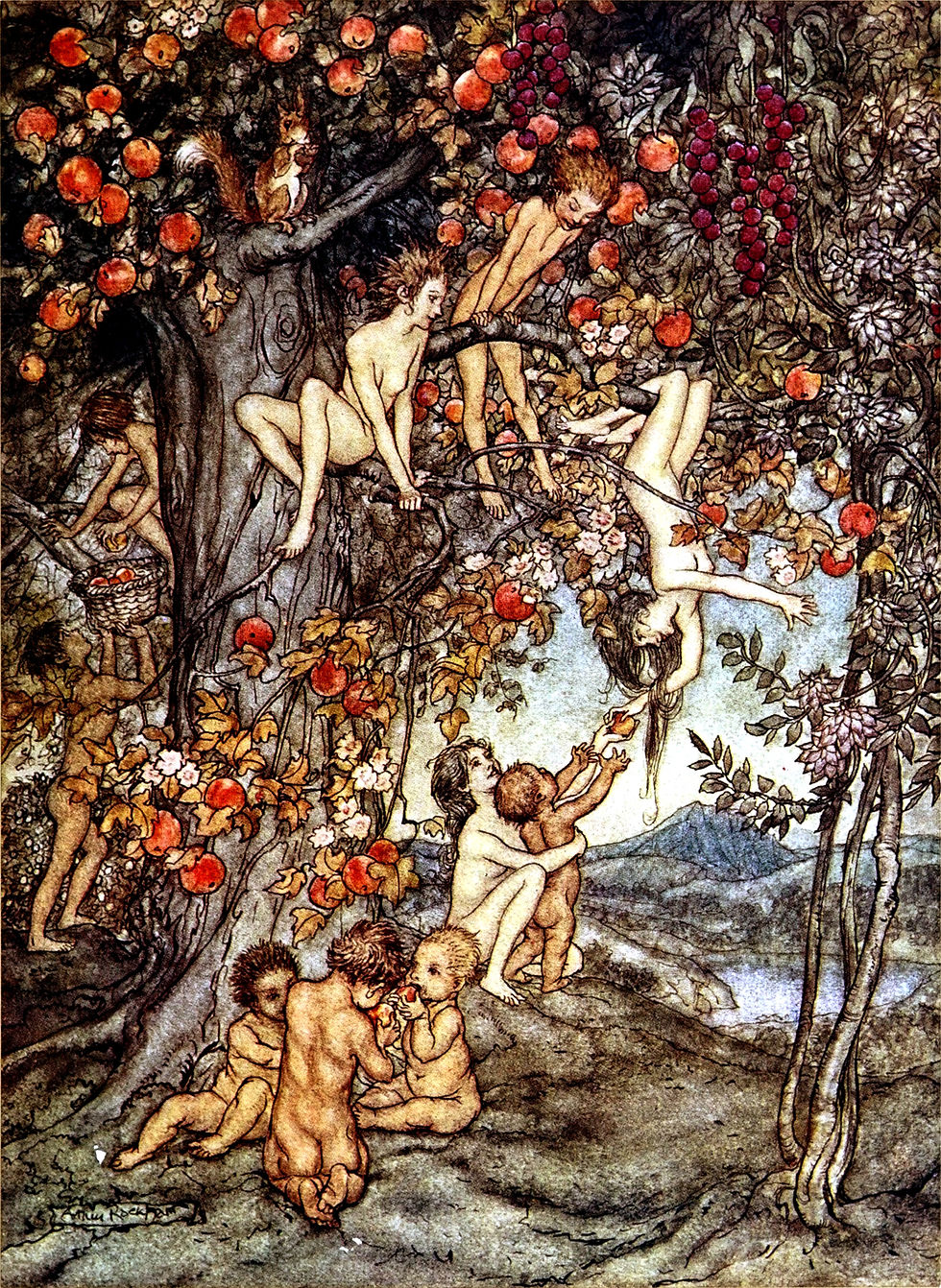
This omission is surprising because the body is the primary medium through which every child encounters the world. Children do not first exist as minds that happen to occupy bodies. Rather, they learn, explore, communicate, and develop through embodied interaction with their environment. Developmental psychology, cognitive science, and phenomenology all point toward the same conclusion: human beings are fundamentally embodied creatures, and the relationship a child develops with their body has profound implications for their sense of self and their understanding of the world (Merleau-Ponty, 1962; Varela, Thompson, & Rosch, 1991).
Yet there is reason to believe that this relationship has changed dramatically over the past century. Many adults can recall periods from childhood in which they were almost entirely unaware of their bodies as objects of attention. Hours were spent climbing trees, exploring forests, building forts, swimming in lakes, chasing friends, or becoming absorbed in games. During such moments, the body was not something to be evaluated, compared, or managed. It simply functioned as the means through which experience occurred.
This state of embodied engagement appears repeatedly in both psychological research and philosophical accounts of human experience. The psychologist Mihaly Csikszentmihalyi (1990) described a similar phenomenon through his concept of flow: a state of deep absorption in which self-consciousness recedes and attention becomes fully directed toward activity itself. Although flow can occur throughout life, childhood often provides particularly fertile conditions for its emergence because children are naturally inclined toward exploratory play and direct engagement with their surroundings.
From this perspective, one of the defining features of healthy childhood may be periods of relative bodily unselfconsciousness. The child does not cease to have a body, nor does bodily awareness disappear entirely. Rather, attention is directed outward toward the world rather than inward toward the constant evaluation of the self.
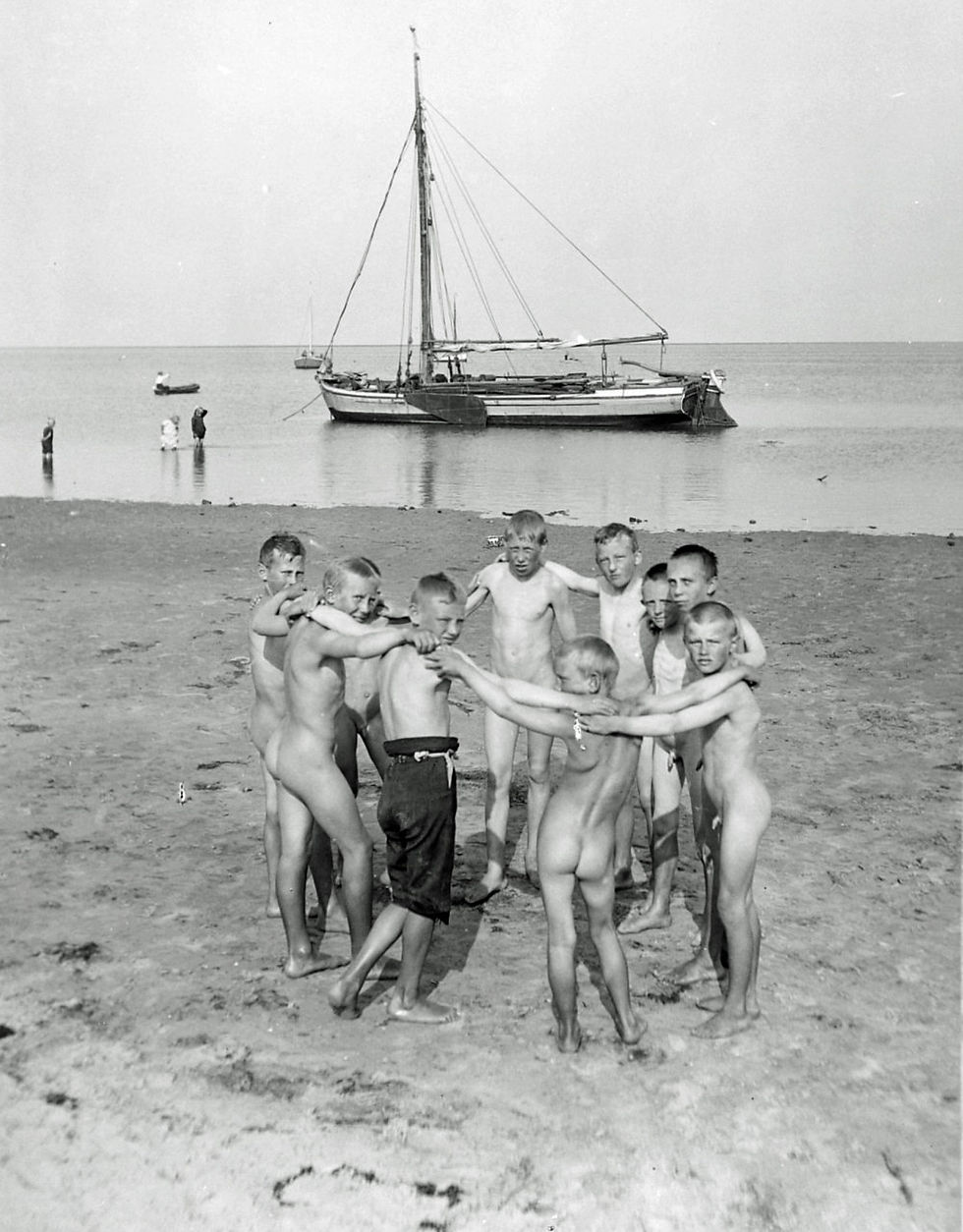
A child climbing a tree does not typically experience the body as an object. The body is simply part of the act of climbing. A child swimming in a lake does not experience the body as an image. The body is simply the means through which the water is felt. A child running through a forest is generally concerned with the terrain, the game, or the destination—not with how they appear while moving through it.
In such moments, the distinction between self and environment becomes less pronounced. The child is not performing for an audience. The child is participating in an experience.
This form of embodied engagement has long been recognized as an important component of childhood development. Peter Gray (2011) argues that free play serves critical developmental functions, allowing children to cultivate problem-solving skills, emotional resilience, cooperation, creativity, and autonomy. Similarly, research on outdoor play consistently links unstructured interaction with natural environments to improvements in physical health, attention, emotional regulation, and psychological well-being (Gill, 2014; McCormick, 2017).
What these activities share is not simply movement. They involve direct engagement with reality. The child learns through touch, balance, sensation, experimentation, and exploration. Knowledge emerges through interaction rather than observation alone. The world is encountered firsthand.
Over the course of the twentieth and early twenty-first centuries, however, childhood has become increasingly mediated. Independent mobility has declined, outdoor play has contracted, and children now spend unprecedented amounts of time interacting with screens (Gray, 2011; Twenge & Campbell, 2018). At the same time, social media platforms, digital photography, and online communication have introduced new forms of self-presentation and self-monitoring into everyday life.
The significance of these changes extends beyond concerns about screen addiction or sedentary behavior. They may be altering the very structure of how children experience themselves.

Historically, children's attention was directed primarily toward the external world. Contemporary children increasingly encounter environments that encourage attention toward representations of the self. Photographs, videos, profiles, avatars, likes, comments, and algorithmically curated feedback all contribute to a culture in which appearance becomes increasingly salient. The body begins to shift from being a medium of experience to becoming an object of observation.
This process resembles what psychologists describe as self-objectification. According to Objectification Theory, individuals who become accustomed to viewing themselves through the imagined gaze of others often devote increasing mental resources to monitoring appearance, behavior, and social evaluation (Fredrickson & Roberts, 1997). Although this framework was initially developed to understand women's experiences in particular, its broader implications are increasingly relevant to children growing up in highly visual and digitally mediated environments.
The consequences are not merely psychological. A child who is constantly aware of being observed experiences the world differently from a child who feels free to become absorbed in it. Self-consciousness redirects attention away from exploration and toward evaluation. Instead of asking, "What can I do?" the child increasingly learns to ask, "How do I appear?"
Hawthorne's Forgotten Childhood
In 1851, Nathaniel Hawthorne published A Wonder-Book for Girls and Boys, a collection of retold Greek myths framed through the story of a group of children gathering in the Berkshire Hills to hear stories from a college student named Eustace Bright. To modern readers, one of the most striking aspects of the book is not the mythology itself but the assumptions it makes about childhood.

The children spend much of their time outdoors. They roam hillsides, explore fields and woodlands, sit among rocks and trees, and interact with one another with relatively little adult supervision. Nature is presented not as a source of danger but as the natural setting for imagination, curiosity, and development.

What Hawthorne portrays was not unusual for his time. Throughout the nineteenth century, childhood was widely associated with exploration, outdoor play, and immersion in the natural world. The children in A Wonder-Book are not constantly monitored, evaluated, or protected from every conceivable risk. Instead, they move through their environment with a degree of freedom that many contemporary children rarely experience.

Equally noteworthy is what Hawthorne does not emphasize. The children's bodies are largely invisible as objects of concern. Their appearance, attractiveness, and social presentation play almost no role in the narrative. The body functions as a transparent vehicle through which the world is encountered rather than an object to be observed and managed. While few contemporary parents would wish to recreate nineteenth-century childhood in its entirety,
Hawthorne's work serves as a useful reminder that many of the assumptions surrounding childhood today are historically specific rather than universal. Freedom, movement, outdoor exploration, and immersion in nature were once considered ordinary features of childhood rather than developmental luxuries.
From Embodiment to Self-Consciousness
One of the less examined consequences of modern childhood is the gradual disappearance of contexts in which the body can simply be experienced as ordinary. Throughout much of history, children routinely encountered bodies—including their own—in non-sexualized contexts. Family bathing, communal swimming, changing areas, beaches, rural life, and ordinary domestic routines often involved forms of bodily familiarity that contemporary societies increasingly regard as unusual.
Historical photographs, paintings, family albums, postcards, and advertisements from the nineteenth and early twentieth centuries frequently depicted unclothed young children without controversy. Such images were generally interpreted through the lens of childhood innocence rather than sexuality. While norms varied considerably between societies and social classes, the existence of ordinary, non-sexual nudity was largely unremarkable.
This situation changed considerably during the twentieth century. A variety of cultural developments—including changing moral norms, increasing awareness of child abuse, evolving legal frameworks, and the growing influence of mass media—contributed to a heightened sensitivity regarding the visibility of children's bodies. As discussed in our previous essay on the social construction of danger, activities that earlier generations regarded as ordinary increasingly came to be interpreted through the lens of risk.
The purpose of observing this shift is not to argue that nudity is inherently beneficial or that all previous practices should be revived. Rather, it is to recognize that the disappearance of non-sexual nudity removed one of many contexts in which children could experience their bodies as ordinary rather than performative.
The significance of non-sexual nudity, from this perspective, is not that nudity itself constitutes a developmental necessity. Rather, it represents one possible environment in which the body ceases to function as an object of evaluation and instead returns to its more basic role as a vehicle for experience.
This distinction becomes particularly important when considered alongside contemporary digital culture. Modern children are exposed to more images of bodies than any previous generation in human history. Yet these images are often highly curated, idealized, commercialized, or sexualized. Consequently, children encounter increasing quantities of representations of bodies while experiencing fewer opportunities to encounter bodies as ordinary features of everyday life.
The result is a paradox. Children today may see more bodies than ever before while simultaneously feeling less at home in their own.
From the perspective of the Community of the Cosmic Divine, this development reflects a broader pattern. Modern life increasingly inserts layers of mediation between human beings and the world around them. Screens mediate experience. Institutions mediate relationships. Cultural narratives mediate perceptions of danger. Increasingly, even the body itself becomes mediated through images, expectations, and social evaluation.
The challenge, therefore, is not merely reducing screen time or changing particular social norms. It is recovering opportunities for direct experience.
Cultivating an Embodied Childhood
If the modern environment encourages children to become increasingly self-conscious and detached from their own physical experience, the obvious question is what parents can do to counteract this trend.
The answer is not to eliminate technology entirely, nor is it to recreate some idealized version of childhood from the nineteenth century. Rather, it is to create opportunities for children to experience the world directly and through their own bodies.
One of the most effective ways to do this is through unstructured outdoor play. Unlike organized activities, free play allows children to direct their own attention, make their own decisions, and engage with their environment without constant evaluation. A child building a fort, climbing a tree, or exploring a creek is not primarily concerned with appearance or performance. The focus is on the activity itself.
Parents can further support this process by resisting the temptation to over-supervise. While genuine dangers must always be considered, children benefit from opportunities to assess manageable risks, solve problems independently, and develop confidence in their own abilities. The goal is not the absence of safety, but the gradual development of competence.
Equally important is the atmosphere children encounter within the home. Many children today grow up under conditions of continuous observation and evaluation. Their achievements are measured, their schedules organized, and their behavior constantly monitored. While structure has its place, children also need spaces in which they can simply exist without feeling that they are being assessed.
This principle applies to the body as well. Parents can help children develop a healthier relationship with their bodies by treating them as ordinary rather than exceptional. Discussions of the body need not be shrouded in embarrassment, secrecy, or anxiety. Children benefit from learning that bodies are natural parts of human existence—functional, diverse, and fundamentally unremarkable.

In some households this may include relaxed attitudes toward changing clothes, bathing, or age-appropriate forms of non-sexual nudity. In others it may simply involve avoiding unnecessary shame and treating bodily matters with openness and matter-of-factness. The specific practices are less important than the underlying message: the body is not a problem to solve.
Perhaps most importantly, parents can model embodiment themselves. Children learn as much from observation as from instruction. Adults who spend all day staring at screens, obsessing over appearance, or treating their own bodies with embarrassment inevitably communicate those attitudes to their children. Conversely, adults who enjoy nature, move comfortably through the world, and demonstrate ease with their own physical existence provide a powerful example.
The ultimate goal is not to make children think more about their bodies.
It is to help them think about their bodies less.
A child who feels secure in their body is free to direct attention outward—to friends, forests, games, ideas, adventures, and experiences. In that sense, one of the greatest gifts a parent can offer is not confidence in the body itself, but the freedom to forget about it.
Nurturing healthy children
A healthy childhood is not one in which the body is ignored. Nor is it one in which the body becomes the center of attention. Rather, it is one in which the body is so fully accepted that it rarely demands conscious consideration at all.
The child who feels at home in their body is free to run, climb, swim, explore, create, and engage with the world without constantly evaluating how they appear to others. Their attention is directed outward toward experience itself rather than inward toward self-monitoring.
Such children are not disconnected from their bodies. They are deeply connected to them. Yet that connection is so natural and unproblematic that the body becomes almost transparent—a trusted companion rather than an object of concern.
Modern childhood increasingly pulls in the opposite direction. Screens, social media, surveillance, performance metrics, and body-conscious cultural norms all encourage children to become observers of themselves. They learn to see themselves through imagined audiences, curated images, and social expectations.
Recovering an embodied childhood therefore requires more than reducing screen time. It requires creating opportunities for children to experience the world directly and to encounter their bodies as ordinary parts of being alive.
The child who forgot they had a body has not lost touch with reality. Quite the opposite. They have become so immersed in the world that the body ceases to stand between themselves and experience. And in that immersion lies one of the deepest forms of human freedom.
References
Csikszentmihalyi, M. (1990). Flow: The Psychology of Optimal Experience. New York: Harper & Row.
Fredrickson, B. L., & Roberts, T. A. (1997). "Objectification Theory: Toward Understanding Women's Lived Experiences and Mental Health Risks." Psychology of Women Quarterly, 21(2), 173–206.
Gill, T. (2014). The Benefits of Children's Engagement with Nature: A Systematic Literature Review.
Gray, P. (2011). "The Decline of Play and the Rise of Psychopathology in Children and Adolescents." American Journal of Play, 3(4), 443–463.
Hawthorne, N. (1851). A Wonder-Book for Girls and Boys. Boston: Ticknor, Reed & Fields.
McCormick, R. (2017). "Does Access to Green Space Impact the Mental Well-being of Children? A Systematic Review." Journal of Pediatric Nursing, 37, 3–7.
Merleau-Ponty, M. (1962). Phenomenology of Perception. London: Routledge.
Twenge, J. M., & Campbell, W. K. (2018). "Associations Between Screen Time and Lower Psychological Well-Being Among Children and Adolescents." Preventive Medicine Reports, 12, 271–283.
Varela, F. J., Thompson, E., & Rosch, E. (1991). The Embodied Mind: Cognitive Science and Human Experience. Cambridge, MA: MIT Press.


Comments